installare timezone converter gratis!
Premere il pulsante copia e incolla nel tuo blog o sito web.
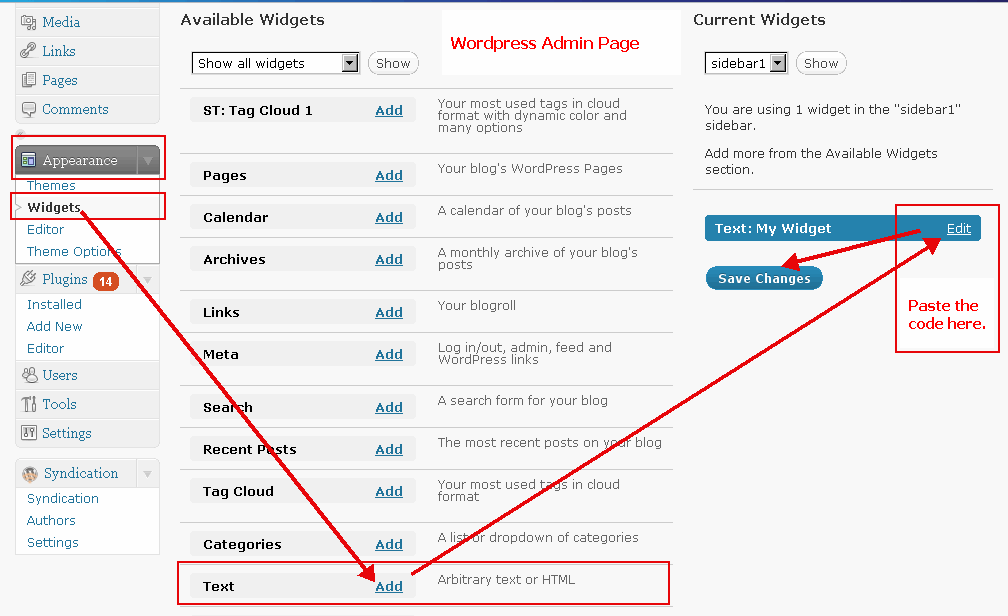
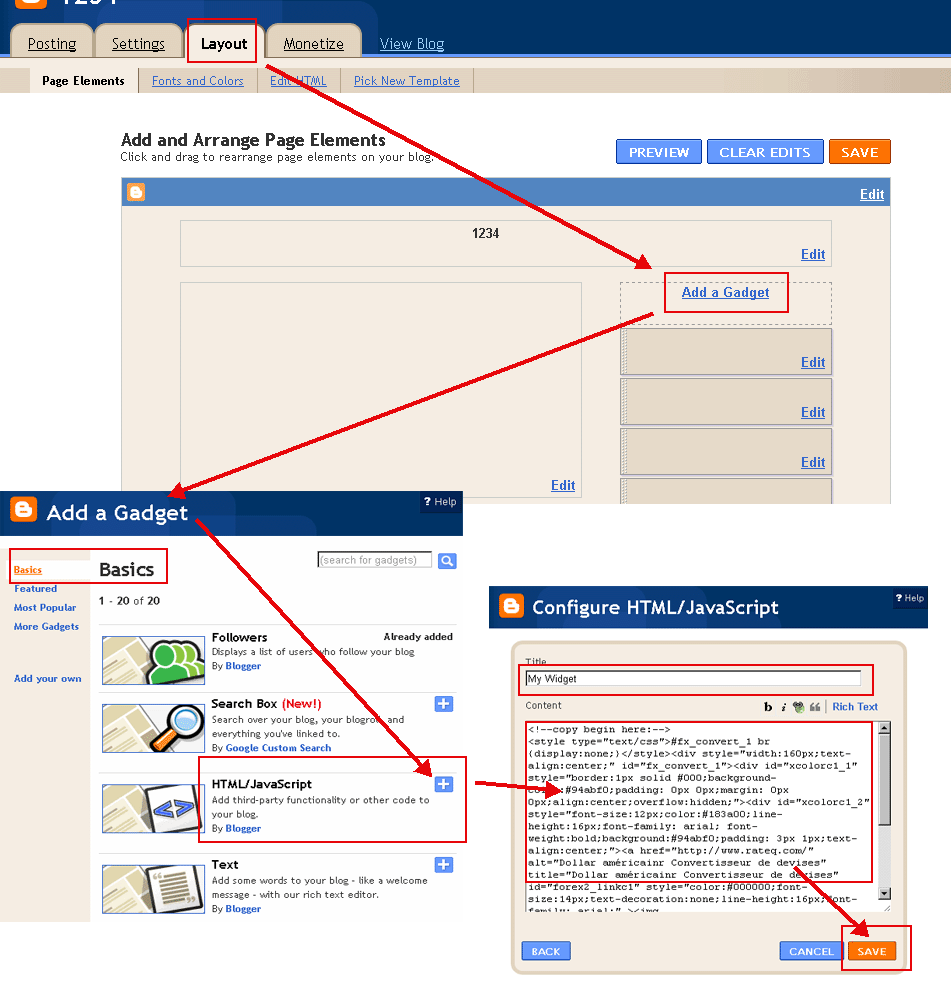
(Si prega di passare alla modalità HTML durante la pubblicazione nel tuo blog. Esempi: WordPress Esempio, Blogger Esempio)
Atomic bombings of Hiroshima and Nagasaki - Wikipedia Over the next two to four months, the effects of the atomic bombings killed 90,000 to 166,000 people in Hiroshima and 60,000 to 80,000 people in Nagasaki; roughly half the deaths occurred on the first day
Hiroshima - Wikipedia Hiroshima was founded in 1589 as a castle town on the Ōta River delta Following the Meiji Restoration in 1868, Hiroshima rapidly transformed into a major urban center and industrial hub In 1889, Hiroshima officially gained city status
Hiroshima | Map, Pictures, Bombing, Facts | Britannica Hiroshima is the capital city of Hiroshima prefecture, southwestern Honshu, Japan It was founded as a castle town in the 16th century and lies at the head of Hiroshima Bay, an embayment of the Inland Sea On August 6, 1945, Hiroshima became the first city in the world to be struck by an atomic bomb
Hiroshima Travel Guide - What to do in Hiroshima City Hiroshima (広島) is the principal city of the Chugoku Region and home to over a million inhabitants When the first atomic bomb was dropped over Hiroshima on August 6, 1945, the city became known worldwide for this unenviable distinction
Bombing of Hiroshima and Nagasaki - HISTORY On August 6, 1945, during World War II (1939-45), an American B-29 bomber dropped the world’s first deployed atomic bomb over the Japanese city of Hiroshima The explosion immediately killed an
Atomic bombings of Hiroshima and Nagasaki | Date, Significance . . . Atomic bombings of Hiroshima and Nagasaki, during World War II, American bombing raids on the Japanese cities of Hiroshima (August 6, 1945) and Nagasaki (August 9, 1945) that marked the first use of atomic weapons in war
 Calendario